
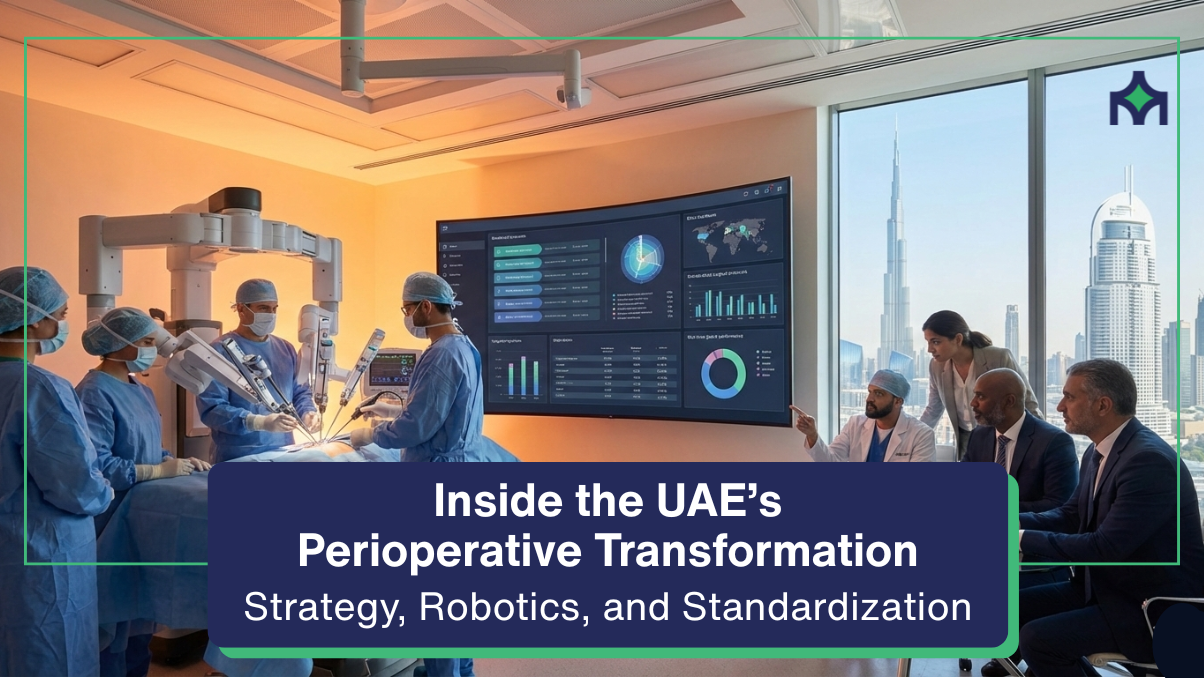
Inside the UAE’s Perioperative Transformation: Strategy, Robotics, and Standardization
Inside the UAE’s Perioperative Transformation: Strategy, Robotics, and Standardization
The United Arab Emirates is rapidly redefining perioperative care, not through isolated technology upgrades, but through a coordinated national strategy that aligns clinical innovation, operational discipline, and system-wide standardization. This transformation is positioning the UAE as a global reference point for high-acuity surgical care, medical tourism, and sustainable healthcare delivery. At the core of this shift is a strategic recognition: perioperative performance is not just a clinical concern, it is an enterprise-wide capability that influences patient outcomes, cost efficiency, and global competitiveness. Strategy First: Designing Perioperative Care at Scale Unlike fragmented adoption seen in many markets, the UAE’s perioperative evolution is guided by centralized health policy and long-term planning. National health strategies emphasize outcome-based care, efficiency, and international patient attraction as interconnected goals (Dubai Health Authority, 2023). This strategic clarity enables health systems to design perioperative pathways that integrate preoperative optimization, intraoperative precision, and accelerated recovery models. The result is reduced variability, predictable throughput, and consistent quality across public and private facilities. Robotics as a Catalyst, Not a Standalone Solution Robotic-assisted surgery has become a defining feature of perioperative transformation in the UAE. Platforms such as the da Vinci system are widely deployed across specialties including orthopedics, urology, general surgery, and cardiothoracic care. However, robotics in the UAE is not positioned as a prestige investment. It is embedded within standardized perioperative workflows that emphasize minimally invasive surgery, reduced complications, and shorter length of stay. Regional studies indicate robotic-assisted procedures can reduce complication rates by up to 30% while accelerating recovery timelines (Middle East Robotics Surgery Review, 2023). For international patients, this translates directly into trust, safety, and faster return to normal life key drivers of medical tourism decisions. Standardization: The Silent Driver of Performance Technology alone does not scale without standardization. One of the UAE’s most significant advantages is its focus on perioperative standardization across facilities. This includes: Consistent preoperative assessment protocols
Standardized OR readiness and turnover processes
Embedded Enhanced Recovery After Surgery (ERAS) pathways
Structured post-operative monitoring and discharge planning
Standardization reduces unwarranted clinical variation while improving predictability in outcomes, staffing, and resource utilization. It also enables advanced analytics to function effectively across systems, supporting continuous improvement and risk mitigation (HIMSS, 2024). Data and Governance Enable Sustainability Behind the scenes, digital health infrastructure plays a critical role. Platforms such as integrated health data exchanges allow providers to monitor perioperative performance in real time, optimize OR utilization, and proactively identify post-operative risks (Dubai Health Authority Health Data Platform, 2023). Equally important is financial governance. High-acuity perioperative care requires precise documentation, coding accuracy, and revenue integrity to sustain investment in advanced technologies. Data-driven operational oversight ensures that innovation remains financially viable, not just clinically impressive. Why the UAE Model Matters Globally The UAE’s perioperative transformation demonstrates a crucial lesson for global health systems: excellence emerges when strategy, robotics, and standardization move together. Robotics elevates precision, standardization ensures reliability, and strategy aligns both with national and organizational objectives. As healthcare systems worldwide face rising surgical demand, workforce constraints, and cost pressure, the UAE offers a replicable blueprint, one where perioperative care is engineered as a system, not a series of disconnected upgrades.
Sources: Dubai Health Authority (2023) Middle East Robotics Surgery Review (2023) HIMSS (2024) Dubai Health Authority Health Data Platform (2023)